Electric LCVs Have a Payload Problem — and the Industry Is Running Out of Solutions
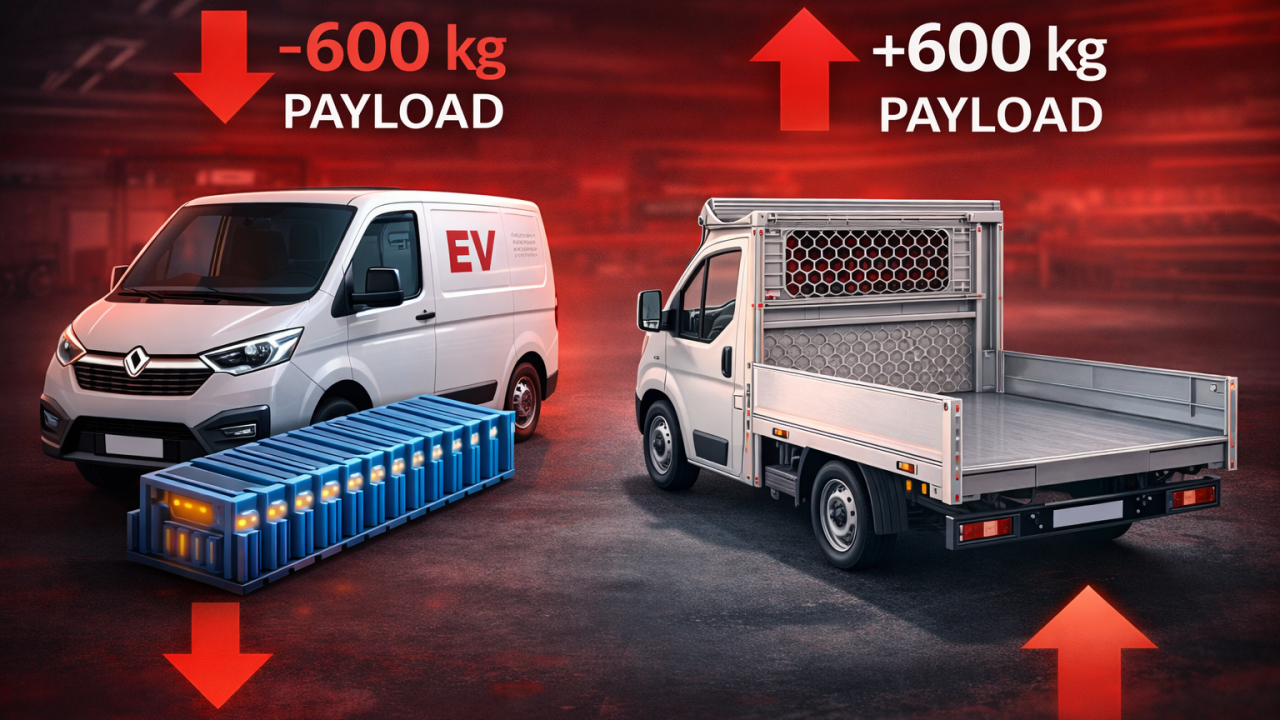
Batteries add 300–800 kg to electric LCVs, cutting usable payload. For fleets running refrigerated bodies, tippers or box bodies, this is not just a technical issue — it is a business model problem. Lightweight body engineering may hold the answer.
Electrification is transforming the light commercial vehicle market. But behind the optimistic headlines about sustainability and zero emissions, a growing operational problem is starting to concern fleet operators across Europe: payload.
Electric LCVs are significantly heavier than their diesel counterparts. Batteries alone can add 300–800 kg to the vehicle weight depending on the platform. And for many businesses, payload is not a technical detail — it is the core of the business model.
⚡ The Hidden Cost of Electrification
When fleets switch from diesel to electric vans or chassis-cabs, they often discover a difficult reality: the usable payload drops.
For operators working with refrigerated bodies, box bodies, service bodies, tippers, or recovery trucks, this weight difference quickly becomes a serious limitation. Less payload means fewer goods transported per trip, more vehicles needed for the same workload, reduced operational efficiency, and higher total cost per delivery.
In some cases, electrification can unintentionally reduce productivity.
🚛 Why the Body Suddenly Matters More Than Ever
For years, body structures were rarely discussed outside technical circles. Today they are becoming a critical factor in vehicle performance. When the chassis becomes heavier, the only place where weight can realistically be saved is the body.
Fleet operators are increasingly asking: How much does the body weigh? Can we reduce structural weight? Are lightweight materials being used? Can the same strength be achieved with less mass? This is pushing the industry toward lighter and smarter body structures.
🪶 The Rise of Lightweight Engineering
Lightweight construction is no longer a niche engineering topic — it is becoming essential. Materials such as aluminium and modular structural systems are gaining importance because they offer significantly lower weight, corrosion resistance, a longer lifecycle, and recyclability advantages.
For electric LCV platforms, every kilogram saved on the body directly translates into more usable payload. And for many operators, that difference determines whether an electric vehicle is economically viable.
🔄 A Strategic Shift for the LCV Ecosystem
Electrification is forcing the entire ecosystem to rethink vehicle design. OEMs focus on batteries and drivetrains. But bodybuilders and engineers now play a crucial role in solving the payload challenge. In many cases, body design will determine whether an electric vehicle works in real operations.
The Question for the Industry
As electric LCV adoption accelerates across Europe: are we paying enough attention to body weight? Or are we focusing so much on electrification that we are overlooking the operational realities fleets face every day?
I would really like to hear from the community: fleet operators experiencing payload limitations with EV LCVs, dealers hearing this concern from customers, bodybuilders addressing the weight challenge, and OEM engineers integrating lightweight body design into vehicle strategy.
The discussion around electrification is only beginning. But solving the payload challenge may become one of the most important engineering priorities in the LCV industry.
Explore Lightweight Body Solutions at Kit-Go
- Browse our aluminium and modular body kits — engineered for minimal weight without compromising strength
- Use the fitment selector — find lightweight body options compatible with your EV chassis
- Request a technical consultation — our team helps you optimize payload for electric platforms