LCV Body Market Trends – Issue #4: Residual Value & Circular Thinking in LCV Bodies
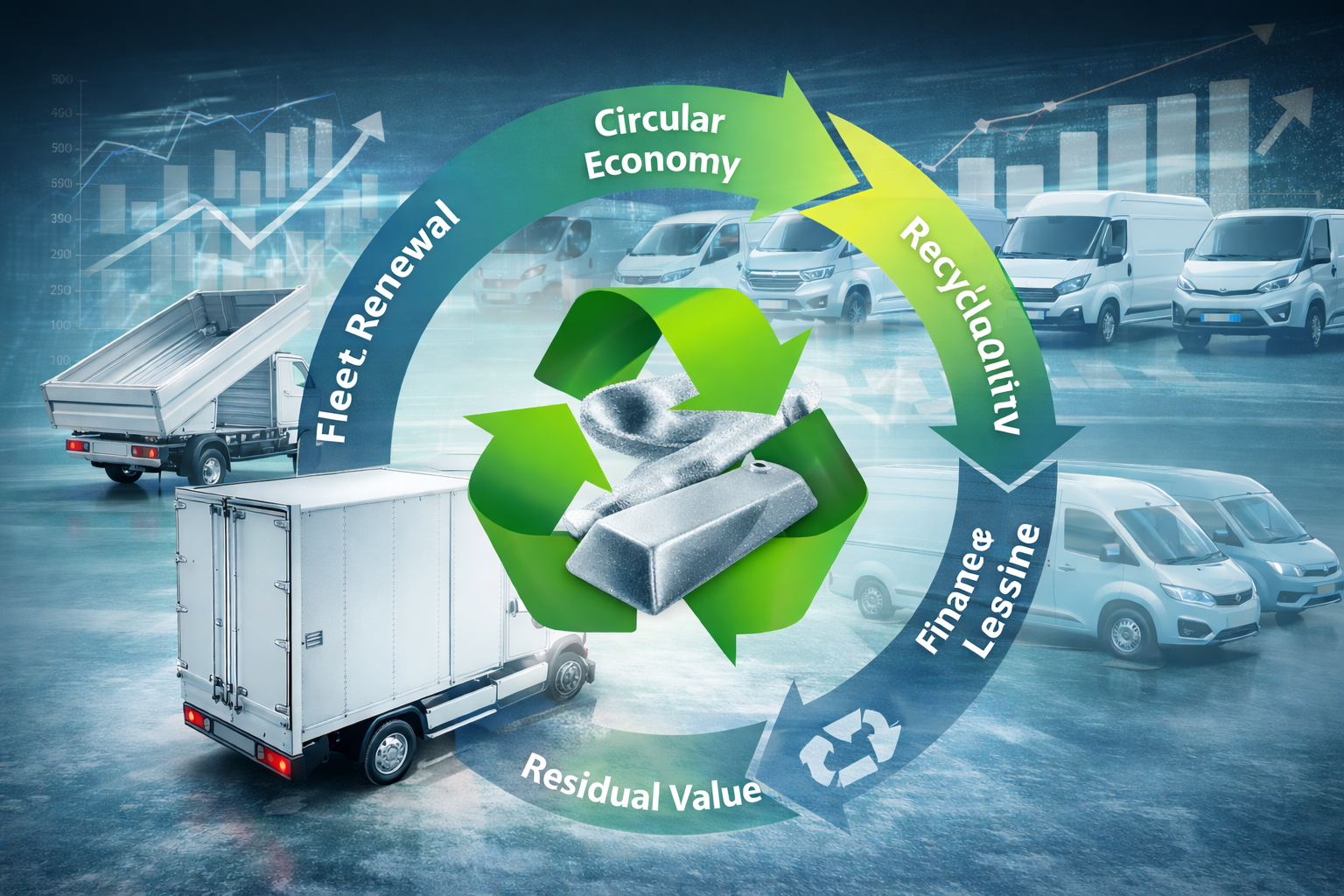
In Western Europe, LCV renewal cycles are now 3–5 years. Residual value, circular economy thinking, and material recyclability are becoming critical competitive advantages in the body market.
Residual Value, Fast Renewal Cycles & Circular Thinking in LCV Bodies
In many Western European markets, LCV renewal cycles are no longer 7–8 years. They are often 3–5 years — sometimes even shorter. And this changes everything.
The question is no longer: "How long will this body last?" The real question becomes: "What is its value after the first lifecycle?"
1. Faster Fleet Renewal = New Financial Logic
With shorter replacement cycles:
- Vehicles return earlier from leasing
- Fleets rotate faster
- Residual value becomes critical
In this context, the body is not just equipment — it is part of the financial equation. Can it be reused? Can it be transferred to a new chassis? Can it be refurbished efficiently?
Bodies designed with modular logic and bolted structures gain a strong advantage here.
2. Circular Economy Is Entering the LCV Body Market
Environmental pressure is no longer optional — it is strategic. OEMs, leasing companies and large fleets are increasingly evaluating:
- Material recyclability
- CO₂ footprint
- Reusability of structural components
- End-of-life material recovery
Aluminium is particularly well positioned: high recyclability, lower weight = better efficiency, re-integration into new production cycles, and strong residual scrap value. Circular thinking is no longer theory — it is becoming a specification parameter.
3. Leasing & Finance Companies Are Paying Attention
In a 3–5 year cycle, the body must maintain structural integrity, preserve appearance, offer predictable refurbishment costs, and retain value in secondary markets. Bodies that are modular, lightweight and repair-friendly perform better in TCO calculations.
4. Electrification Accelerates the Shift
Electric LCV platforms evolve quickly. Battery technology, software, and chassis architecture change fast. If a body can outlive the first electric platform and be transferred or partially reused, the investment becomes significantly more protected.
The Real Strategic Question:
Are we designing bodies only for first delivery — or for multiple economic cycles?
As renewal cycles accelerate and environmental scrutiny increases, durability, recyclability and second-life adaptability may become stronger competitive advantages than pure delivery speed.
Because the next competitive edge may not just be speed — but lifecycle intelligence and circular efficiency.