Lightweight Aluminum Bodies: The EV Advantage with Kit-Go
When it comes to electric commercial vehicles, every kilogram matters. Discover how Kit-Go's lightweight aluminum body kits help 3.5–7.5t electric trucks carry more, go farther, and get on the road faster – all while maintaining strength and durability for demanding jobs.
When it comes to electric commercial vehicles, every kilogram matters. Discover how Kit-Go's lightweight aluminum body kits help 3.5–7.5t electric trucks carry more, go farther, and get on the road faster – all while maintaining strength and durability for demanding jobs.
Electric drivetrains have changed the game for commercial vehicles – and not just under the hood. One of the biggest challenges (and opportunities) with electric LCVs is weight. Batteries are heavy, so any weight saved elsewhere directly benefits payload and efficiency. This is why switching from a traditional steel body to a lightweight aluminum body is a smart move for electric trucks. Kit-Go, with its all-aluminum chassis kits, is at the forefront of this transformation.
The Weight-Payload Dilemma
In a conventional 3.5t diesel van, a steel-framed box body might be fine because the chassis had payload to spare. But in an electric 3.5t chassis, the battery system could weigh an extra 500–700 kg. To compensate, European regulations often allow electric LCVs an increased gross weight (up to 4.25t for drivers with a standard license). However, if you then install the same old heavy body, you've eaten up that allowance with the body's own weight – leaving little room for cargo.
Every kilogram of body weight saved is a kilogram more available for useful payload (or an extra kilometer of range). In fact, studies show that shedding 100 kg can improve an EV's energy efficiency by several percent. For fleet operators, that can add up to thousands saved in operational costs over a vehicle's life.
Why Aluminum Kits Excel
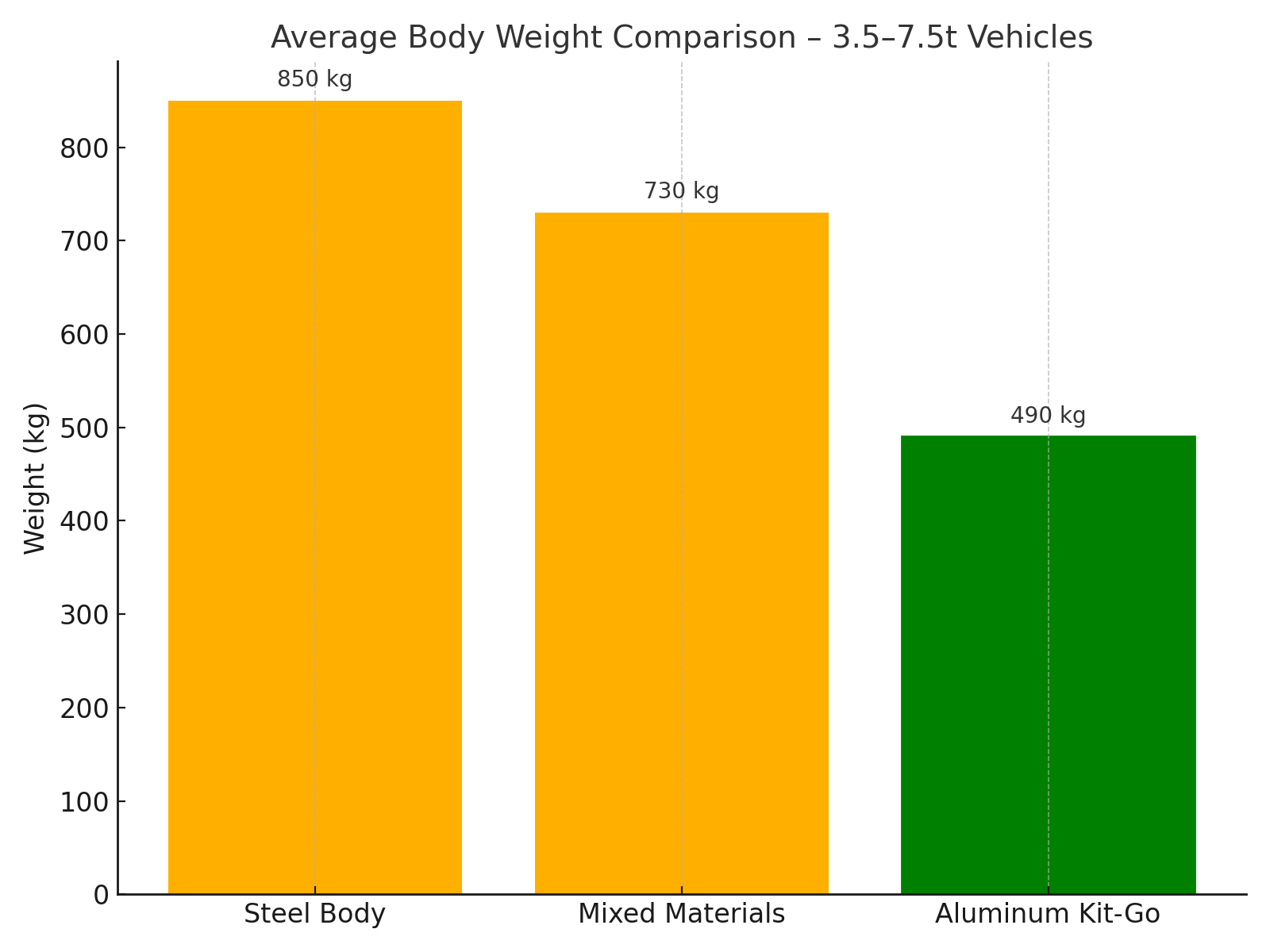
A finished aluminium body is typically 30–40% lighter than an equivalent steel body — a difference that translates to hundreds of kilograms less on a real vehicle. Kit-Go's bodies are engineered with high-strength aluminium alloys, meaning they handle the same loads and stresses as steel while weighing dramatically less. For example, an aluminium dropside bed or box frame can save 200–350 kg compared to its steel counterpart. This yields concrete benefits:
• More payload: Haul extra goods or equipment without exceeding weight limits. A lighter body lets an electric truck carry closer to what its diesel equivalent could.
• Better range & efficiency: Less dead weight means the battery isn't working as hard. Especially in stop-and-go urban routes, a lighter vehicle uses less energy per mile.
• Lower wear & tear: Reducing weight also eases strain on brakes, tires, and suspension. That can mean lower maintenance costs over time – a bonus on top of fuel savings.
Kit-Go – so Simple, so Fast
Beyond the material itself, Kit-Go's approach to body building brings efficiency in assembly. Our kit-based system means each body arrives as a set of pre-fabricated, precision-cut parts – almost like a life-size mechano set for your truck. This offers several advantages:
• Rapid installation: A Kit-Go body can be assembled and mounted in a matter of hours, not days. There's no lengthy welding or fabrication needed; everything is designed to fit together perfectly. This gets your vehicle on the road faster, minimizing downtime.
• Consistency and quality: The kits are manufactured in a controlled environment with jigs and fixtures, ensuring every unit meets the same high quality standards. You don't have to worry about the variability that can come with one-off, hand-built bodies.
• Easier logistics: Shipping a flat-pack kit is far more efficient than transporting a fully built body. Kits can be delivered to anywhere in Europe and assembled on-site by our trained partners or even your own workshop team.
Built for the Long Haul
Aluminum's benefits continue over the life of the vehicle:
• No rust, no fuss: Aluminum alloys are corrosion-resistant, meaning your body kit won't suffer the creeping rust that steel bodies do. This is especially important for electric vehicles expected to have long service lives.
• Maintenance-friendly: Kit-Go designs prioritize modularity. Panels can be replaced individually if damaged, without cutting or grinding. Less weight also makes manual handling of parts easier during repairs or adjustments.
• Resale value: An electric chassis with an aluminum body may fetch a better resale price – buyers know the body hasn't been weakened by rust, and they appreciate the extra payload capacity.
Real-World Impact
Imagine an electric delivery truck that used to carry 1000 kg of goods with a steel body. By switching to a Kit-Go aluminum body, it might carry 1200 kg with the same chassis and battery – a 20% boost in productivity per trip. Alternatively, that truck could go further between charges if it doesn't always max out its load.
Kit-Go's lightweight kits are not just about saving weight; they're about optimizing the entire workflow of putting an electric fleet on the road. By providing body solutions that are quick to assemble, we help businesses avoid long wait times at traditional coachbuilders. And by using aluminum, we ensure that every one of our kits inherently improves the performance of the customer's vehicle.