The Road Ahead: Electric LCVs and the Next 5 Years
What's next for electric light commercial vehicles? We gaze into the future of Europe's 3.5–7.5t LCV market – from technological leaps and infrastructure growth to the evolution of body-building. See how trends like faster charging, improved batteries, and kit-based bodies will shape the industry by 2030.
What's next for electric light commercial vehicles? We gaze into the future of Europe's 3.5–7.5t LCV market – from technological leaps and infrastructure growth to the evolution of body-building. See how trends like faster charging, improved batteries, and kit-based bodies (with Kit-Go leading the charge) will shape the industry by 2030.
The electric LCV revolution is just getting started. Over the next five years and beyond, we expect the pace of change in the 3.5–7.5 ton commercial vehicle segment to accelerate even more. By 2030, electric vans and trucks won't be the outliers – they'll likely be the new normal in cities and fleets across Europe.
Surging Adoption and Policy Push
If the current trajectory holds, many industry analysts predict that well over 30% of new LCV sales in Western Europe could be electric by 2030 (up from single digits today). Government policies virtually ensure this outcome: major EU cities are introducing zero-emission zones that will, in effect, require electric delivery vehicles. Meanwhile, the EU's 2030 CO₂ targets (a 50% cut for vans) and the 2035 ban on new combustion vehicle sales create a hard deadline for full electrification.
In short, regulation will keep tightening, and fleets are planning their transition now to avoid being caught off-guard. We can anticipate a wave of last-minute diesel fleet replacements as 2030 approaches, which will further spike EV demand.
Better Batteries, More Range
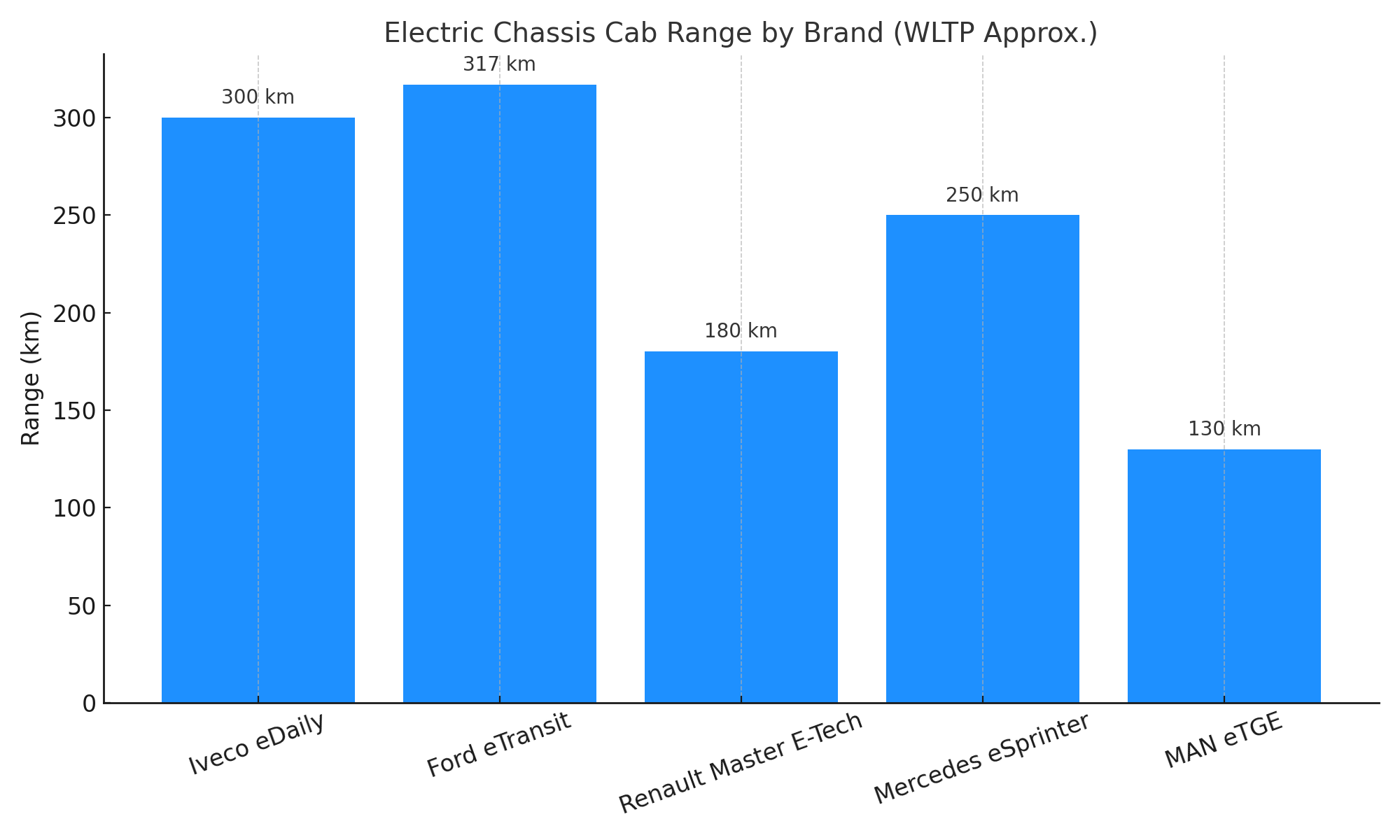
Battery technology is steadily improving. By late this decade, we'll see electric LCVs with significantly longer range and better efficiency than today's models. Advances like higher energy-density cells, solid-state batteries, and improved thermal management will allow future electric trucks to comfortably exceed 300–400 km on a charge (even when carrying a load).
Importantly, these improvements might come without adding extra weight – in fact, next-gen batteries could be lighter. That means future 3.5t EVs might not need the current 4.25t weight exemption to achieve decent payload, as the vehicles will be inherently more weight-efficient.
Ubiquitous Fast Charging (and Smart Charging)
Infrastructure is expected to catch up quickly. The EU is investing heavily in public charging stations, including high-power DC chargers along highways (handy for inter-city medium trucks). Depot charging will also get smarter: many fleet operators will install solar panels and energy storage on-site to mitigate energy costs.
Megawatt Charging System (MCS) standards – initially for heavy trucks – might trickle down to light/medium trucks, enabling incredibly fast top-ups during loading/unloading. In everyday terms, charging an electric van could become as routine and quick as a coffee break.
Total Cost of Ownership Turns in Favor
Electric LCVs should decisively beat diesel on total cost of ownership (TCO) well before 2030. We're already nearing that crossover as battery prices come down. By mid-decade, fleet managers will look at five-year operating costs and see EVs clearly saving money – not just on "fuel" (electricity vs. diesel) but also on maintenance (fewer moving parts, less wear).
The Rise of Modular, Fast-Build Bodies
One of the most exciting changes will be in how vehicles are bodied and delivered. As we discussed, lightweight construction is key for EVs – and we foresee that by 2030 the majority of LCV bodies will be aluminum or composite, not steel. More than that, the industry is moving toward modular body solutions.
Instead of crafting each body from scratch over weeks, manufacturers and convertors are increasingly using kit-based assemblies (like Kit-Go's) to reduce build time from days to hours. This will be crucial to meet the surging demand: if tens of thousands of electric chassis are being produced, the old bottleneck of slow coachbuilding must adapt.
We anticipate OEMs will form closer partnerships with kit providers – possibly offering "chassis + body kit" packages directly to customers. The lines between vehicle manufacturer and bodybuilder could blur, with some body kit companies effectively becoming an extension of the OEM's production line.
Digital Transformation of Sales and Service
The next generation of fleet managers is tech-savvy and expects convenience. The process of spec'ing and ordering commercial vehicles (and their bodies) is moving online. Kit-Go is spearheading this trend – for example, we are launching a digital platform where dealers and customers can configure and order body kits with a few clicks, complete with real-time freight cost calculations and rapid quotes.
Kit-Go's Vision
As a company deeply embedded in this evolving industry, we're incredibly optimistic about what's coming. We are aligning our own growth plans with these trends. This means expanding our kit range, scaling production & logistics, and innovating continuously to stay ahead of the curve.