The EU Van Market Just Turned the Corner — What It Means for Body Builders in 2026
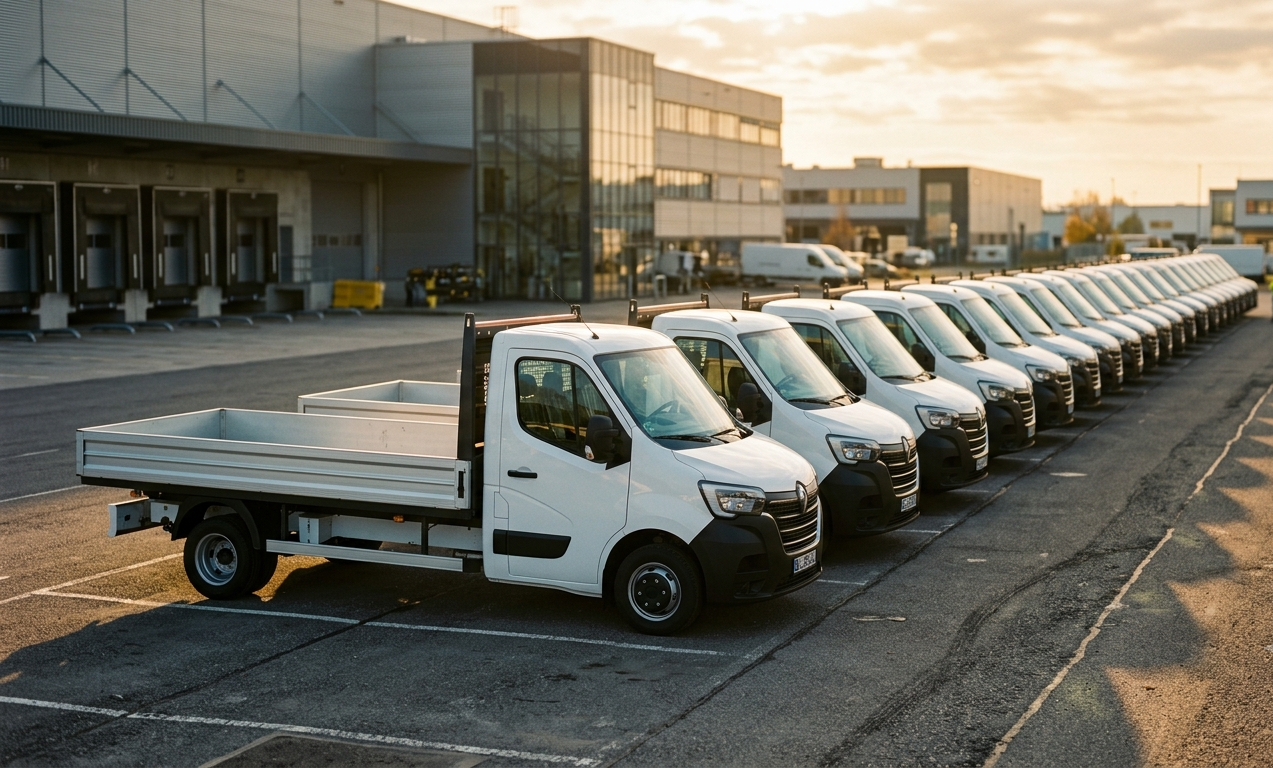
EU van registrations rose +2.3% in Q1 2026 after a -8.8% 2025 (ACEA). What the recovery and the e-van boom mean for body builders and LCV dealers.
After five consecutive quarters of decline, Europe's van market is growing again. New van registrations in the EU rose +2.3% in Q1 2026, according to ACEA — the first positive quarter since the downturn began. For body builders and LCV dealers, this is more than a statistic: it is the signal that the replacement cycle postponed through 2025 is finally being released.
What actually happened in 2025
2025 was a hard year for everyone in the commercial vehicle chain. EU van registrations finished the year at -8.8%, with the three biggest markets all in the red: France, Germany and Italy each lost around 5-6%. Spain was the exception, growing +11.7%. Fleets simply kept their vehicles longer, and every postponed chassis purchase was a postponed body order.
But the composition of the market changed faster than its size. Electrically-chargeable vans nearly doubled their share — from 6.1% to 11.2% of new registrations. Electric chassis are heavier, which makes every kilogram of body weight a payload decision. Lightweight aluminium bodies are no longer a nice to have; on an e-LCV they are often the difference between a usable 3.5t vehicle and one that cannot legally carry its load.
Why Q1 2026 is different
Three forces are converging. First, the postponed replacement demand of 2025 is coming back. Second, last-mile logistics keeps growing structurally across the EU. Third, chassis availability has normalised, so the bottleneck is shifting downstream — to body building capacity.
Workshops across Western Europe report long lead times for bodies, while skilled welders and fabricators are harder to find and more expensive every year. When demand returns faster than fabrication capacity, the winners are the body builders who can mount more bodies per week without hiring more fabricators.
The practical conclusion
This is exactly the problem pre-engineered body kits solve. A CKD or partially assembled kit turns a fabrication job into an assembly job: 1-2 workers, 3-4 hours, no welding hall, no steel purchasing, consistent quality and complete documentation from the manufacturer.
At Kit-Go we manufacture aluminium and steel body kits for all major LCV chassis — Sprinter, Crafter, Daily, Transit, Master, Ducato, Boxer, Jumper, TGE, Movano and more — in CKD, partially assembled and fully assembled form, with transparent volume pricing published online.
Ready for the recovery cycle
More bodies per week.Without more fabricators.
Pre-engineered kits turn a fabrication job into an assembly job. 350+ aluminium and steel body kits — CKD, partially assembled, fully assembled — for all major EU LCV chassis, with volume pricing published online from unit 1.
+2.3%
EU van market Q1 2026
350+
Body kit models
3-4 h
PAS install, 1-2 workers
Browse all body kits →
Request B2B quote
Sources: ACEA — European Automobile Manufacturers' Association, new commercial vehicle registrations, FY 2025 and Q1 2026 (acea.auto).